My Pollinator Pal
This site may contain affiliate links. If you buy through them, I may earn a small commission at no extra cost to you.
Bees Aren’t as Scary as They Look
Most bees want flowers, not you. Here’s how to relax around them, and how to help your kids do the same.
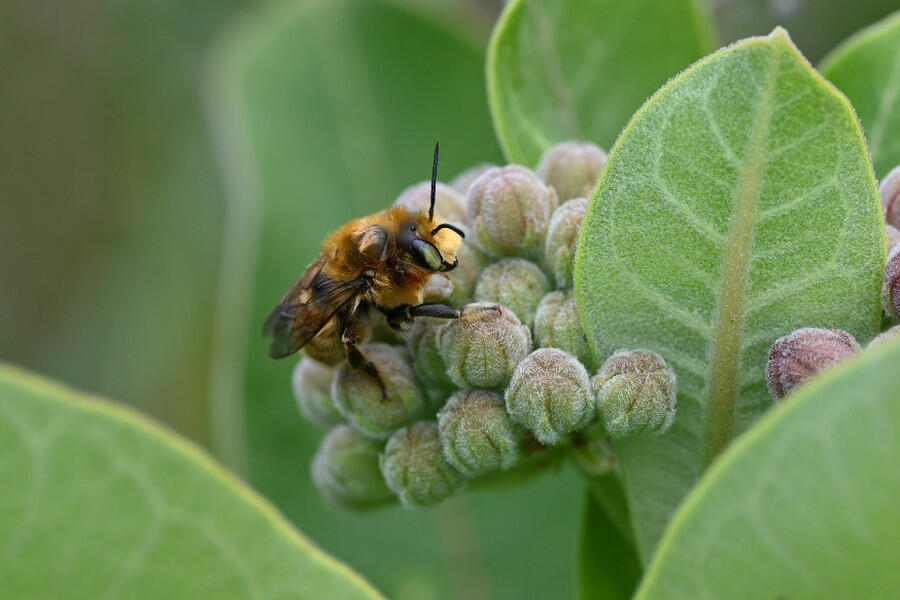
Why invite bees in?
• More food from your garden. Tomatoes, blueberries, raspberries, pumpkins, and peaches all depend on bees to set fruit.
• A healthier, livelier garden. More flowers, more color, and more life to watch.
• A free science lesson. Kids learn how food grows by watching the busiest visitors in the yard.
Most bees are gentle
Most bees are solitary and don’t live in hives, so there’s no nest to defend. They rarely sting. And male bees have no stinger at all.
Who really stings?
Honey bees sting mainly to defend their hive. The insect people usually mean is the yellowjacket, a wasp that shows up at picnics for sweet food and drinks. A bee on a flower is busy with a very different job.
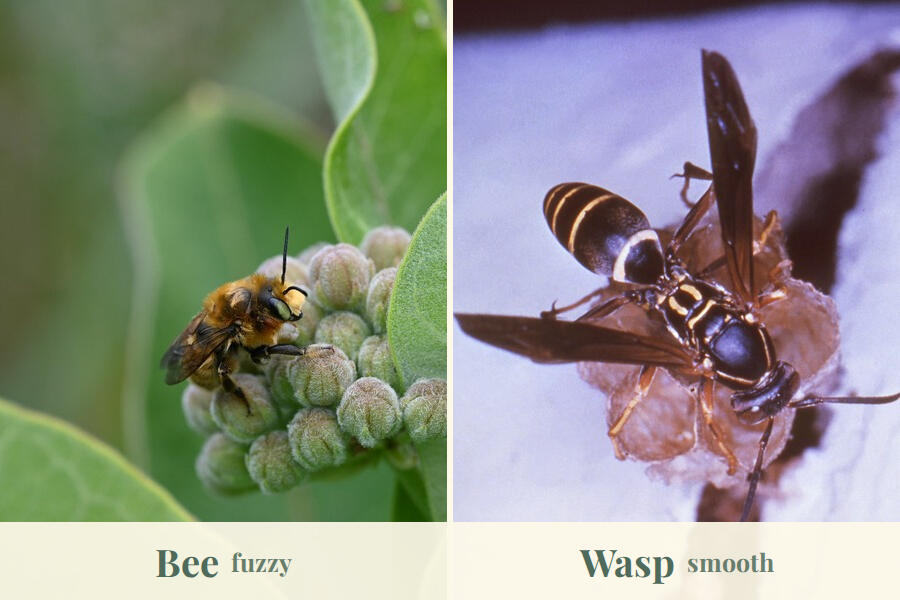
Bee or wasp?• Bees are fuzzy, with hairy bodies and legs. They often carry balls of pollen on their legs or belly, and they eat pollen and nectar.
• Wasps are smooth, with few hairs and often a thin waist. Many hunt other insects, which is why they go after meat and table scraps.
Meet the sweat bee
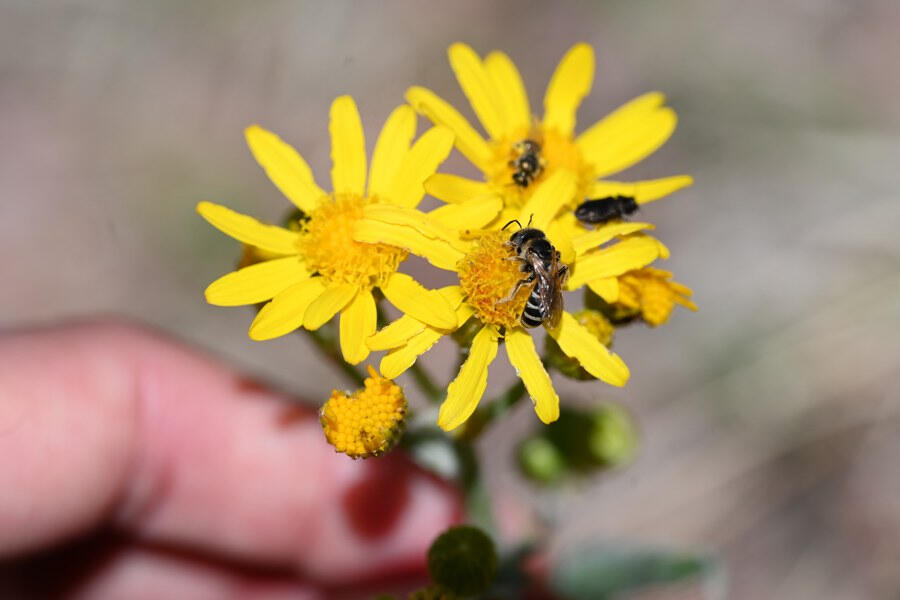
Sweat bees are small native bees. On hot days they’re drawn to the salt in your sweat, so one may land on you.
• Not aggressive. Stay calm and it will fly off.
• If it stays, brush it off gently.
• Only squeezing one risks a mild sting.
Easy rules for kids• Look, don’t touch.
• Avoid sudden movements. Don’t swat or wave your arms. Move away slowly.
• Wear closed shoes outside, not bare feet or sandals.
• Keep food and sweet drinks covered at picnics.
What to wear
Plain, light-colored clothes and no strong scents are less likely to attract bees. Bright floral prints, perfumes, and scented lotions can draw them in.
Make a bee corner together
• Plant a few flowers bees love.
• Leave a patch of bare, sunny soil. At least three-fourths of native bees nest in the ground.
• Leave a foot or so of dead stems standing. Some bees nest in them.
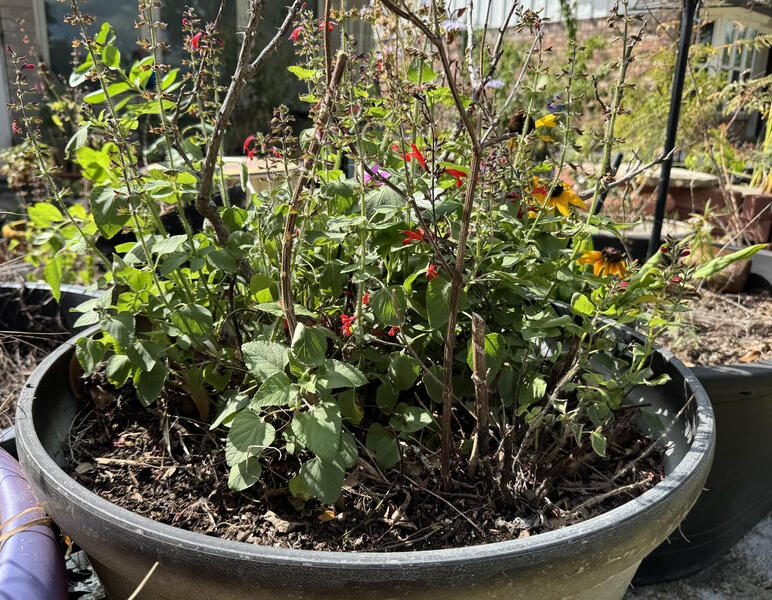
A salvia and black-eyed Susan in one pot. No yard needed. Leave a few stems standing and a bit of bare soil.
A safety note
If anyone in your family has a bee-sting allergy, talk with your doctor about a plan. Seek medical care right away for signs of a severe reaction, such as swelling of the tongue or trouble breathing.
Sources: Kaiser Permanente Health Encyclopedia, “Preventing Insect Stings” (WebMD Ignite); Smithsonian’s National Zoo, “7 Things You Should Know about Bees and Other Pollinators”; University of Maryland Extension, Bees and Wasps and Why They Sting; Utah State University Extension, Beginner’s Guide to Common Native Bees and Gardening and Landscaping Practices for Nesting Native Bees; University of Minnesota Extension, “Solitary wasps”; Missouri Department of Conservation, “Halictid Bees (Sweat Bees).
© 2026 My Pollinator PalHelping gardeners create thriving pollinator habitats.
About · Privacy · Disclosure
Photo credits: Michelle Boone/NPS (bee on milkweed buds; a sweat bee, a beetle, and a bee foraging on flowers). Michelle Boone/NPS (bee on milkweed buds; a sweat bee, a beetle, and a bee foraging on flowers); CDC/Dr. M.V. Smith (paper wasp), My Own (large flower pot).